
Institut der Armen Schulschwestern (School Sisters)
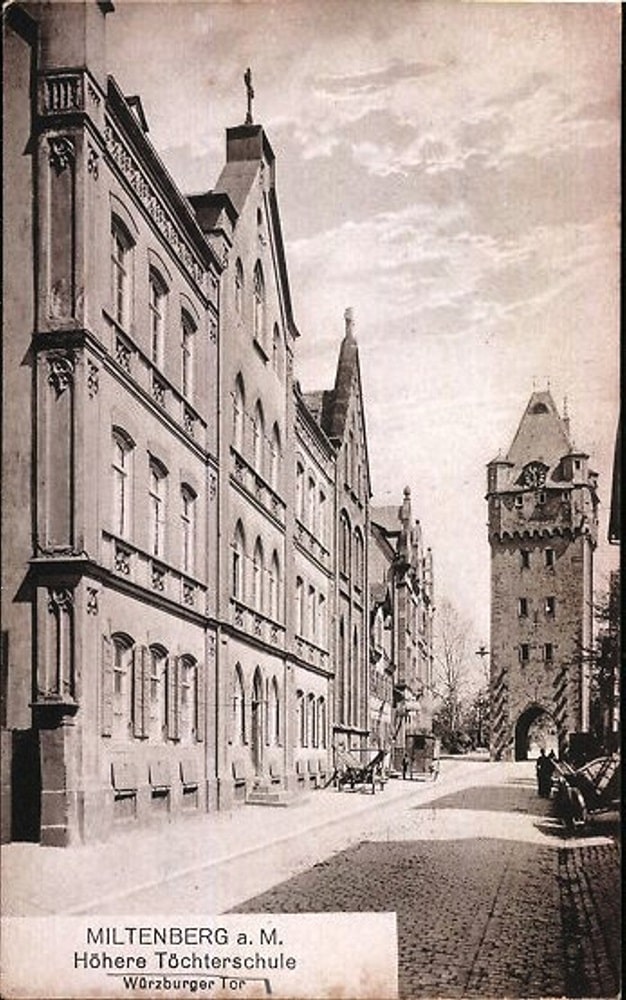
In 1851 the priest Dr. Franz Ludwig Bardum invited the School Sisters of Notre Dame to teach at the girls’ school and to manage the orphanage and the primary school on the opposite side of the road. A “Höhere Töchterschule” with a boarding school could be added in 1854. This school was included in the […]
Former Court House
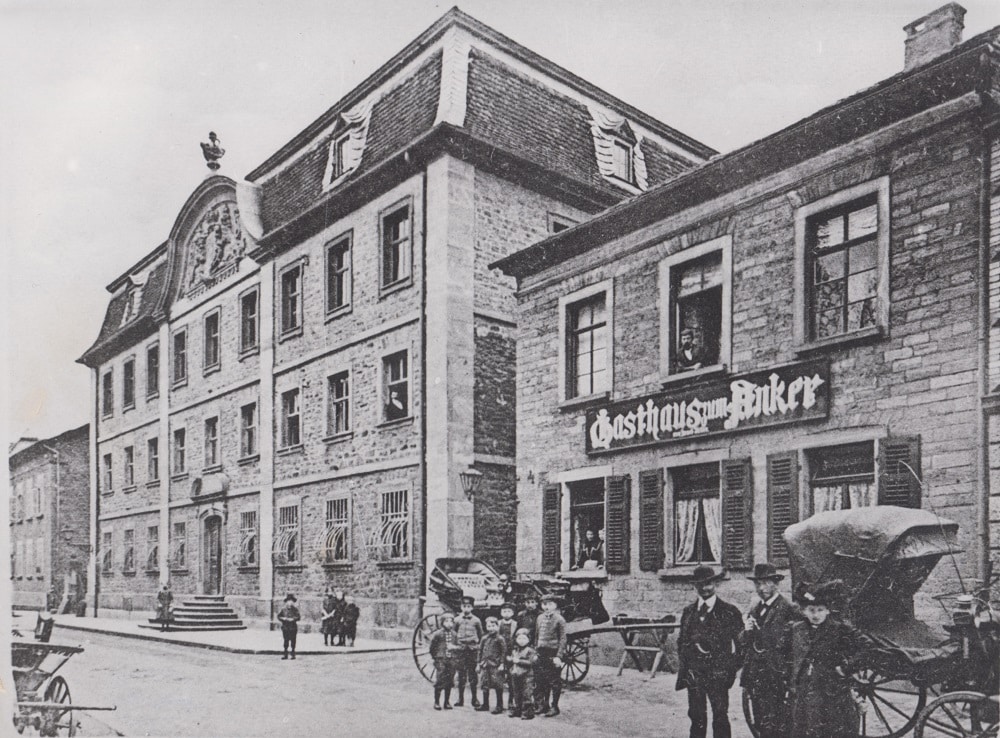
Built in 1779 as the customs office of the archbishop of Mainz it became the temporary residence of the Prince of Leiningen in 1802. After a short use as an inn “Römischer Kaiser” it was used as a dower by the Princes of Löwenstein. When executive and judiciary were separated in the Kingdom of Bavaria […]
Former Archiepiscopal Tithe House (Hartigsbau)
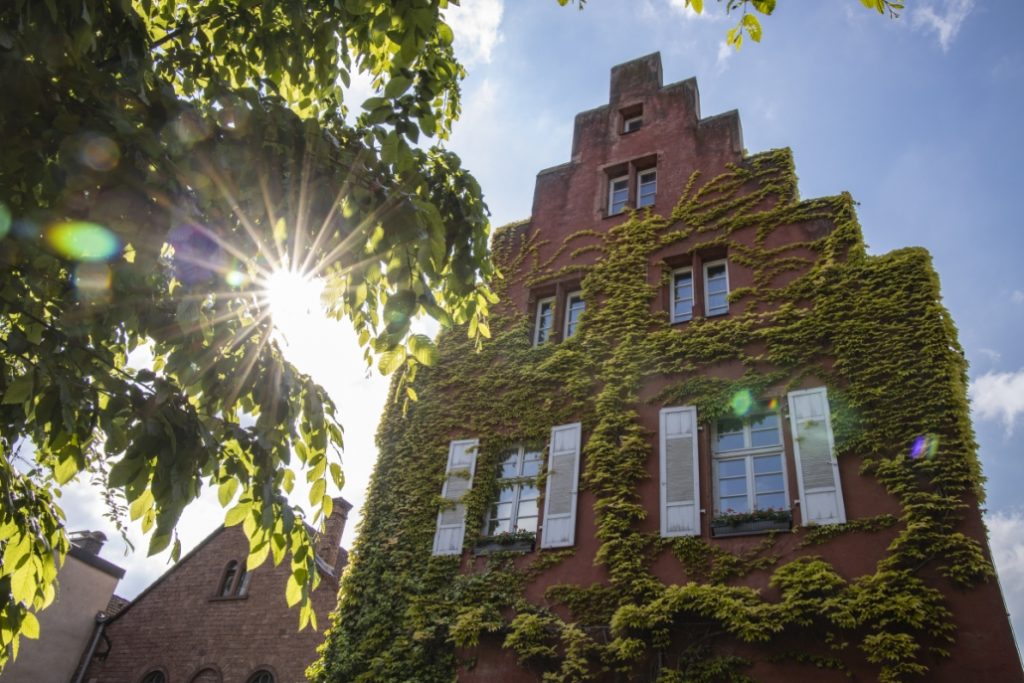
Nr. on the small map: 31 (Miltenberg) The archiepiscopal bailiff’s seat received its name Hartigsbau honoring its owner in the 19th century. Beforehand, it had been the administrative center of the chapter of Mainz, designed in late Gothic style. The tithe used to be collected there, particularly through wine. The main building with the stepped […]
Franciscan Monastery

Nr. on the small map: 30 (Miltenberg)The Franciscans, already established in town since 1630, lived in the hospital. Due to the Thirty Years War, the construction of their new home had been delayed. Therefore, the building process of the monastery started in 1660 and the church construction after 1667, realizing designs of the court architect […]
Monument “DenkOrt Deportationen 1941 – 1944”
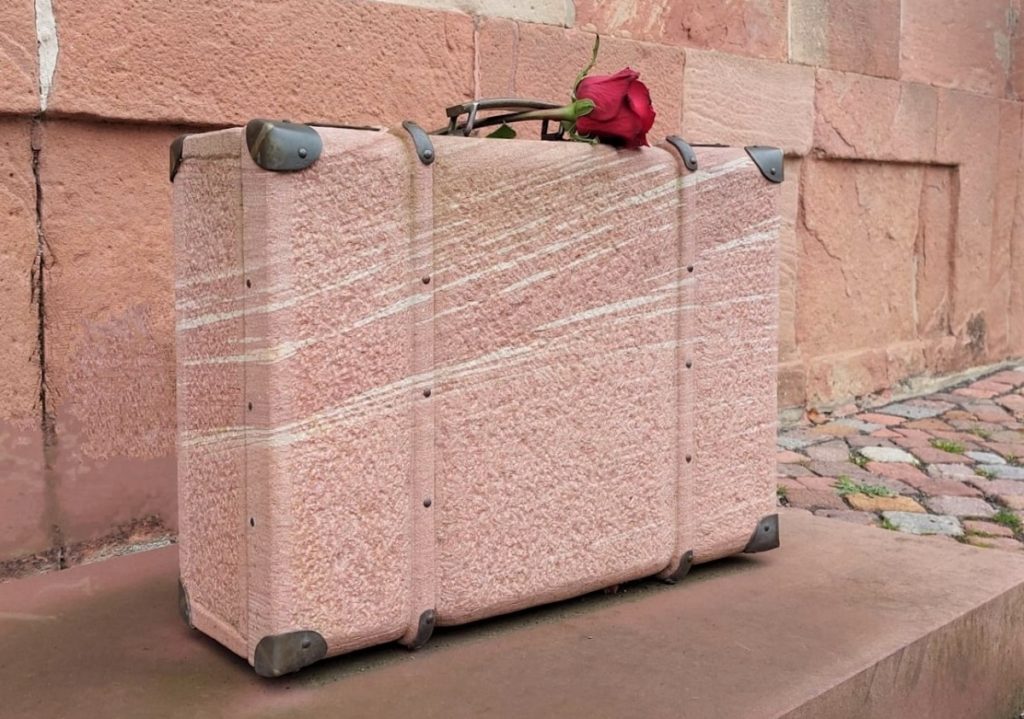
In memory of the Jewish citizens of Miltenberg 1933 – 1945 They were humiliated, robbed, driven away and deported. 30 people who had lived in Miltenberg in 1939 were murdered by the Nazis. Miltenberg is part of the decentralized memorial site “DenkOrt Deportationen 1941 – 1944”. It consists of suitcases, rucksacks or rolled-up blankets, commemorating […]
Tourist Information and Town Hall

The carpenter, architect and builder Jakob Stoer built today’s town hall in the early 17th century. For a while it was also used as the bailiff’s administrative building. In the 18th century it became the inn zum Engel (The Angel), which was the best place to stay in 1820 and closed in 1910. The assembly […]
Former Post Office
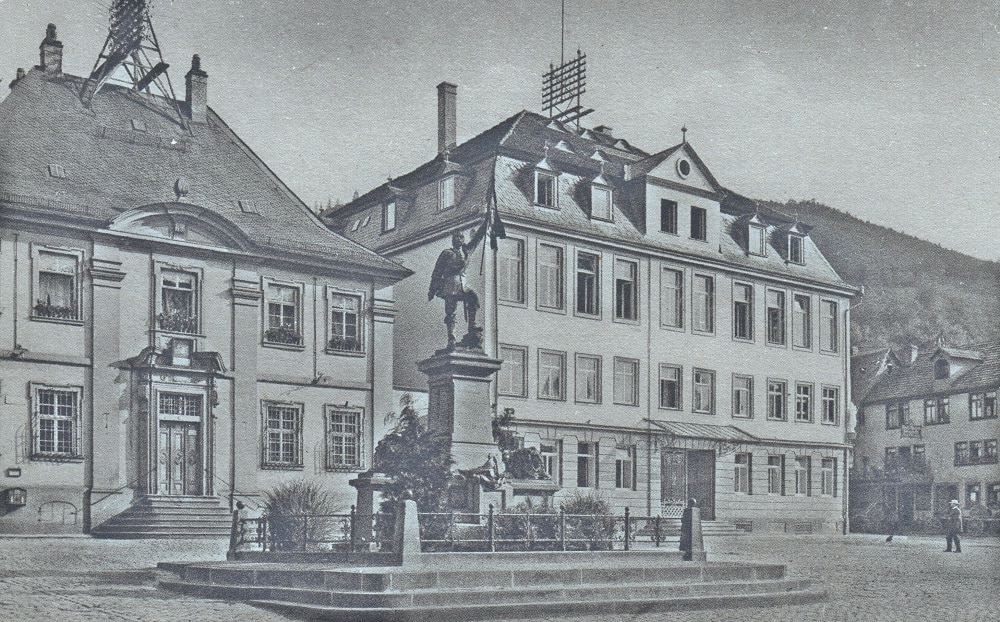
Built in 1712 in the Baroque style, this building was the town house of Bernhard Rödinger, who was the archiepiscopal bailiff. It was used as a post-office from 1824 to 1968. Later it became the seat of the employment office, then of the notary’s office. After that the town’s administration moved in.
Square Engelplatz
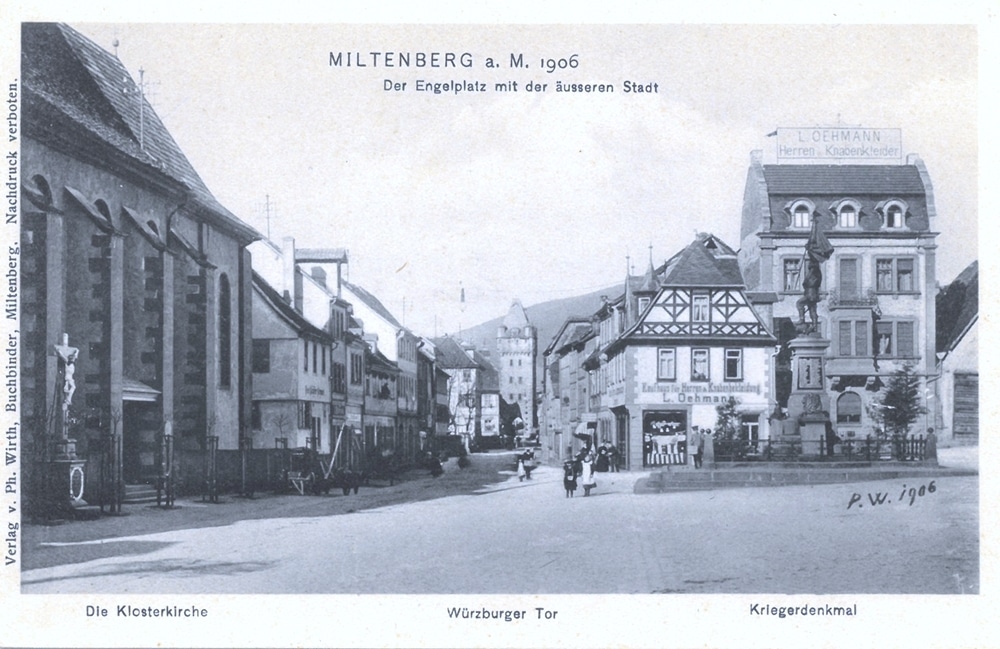
Today’s Engelplatz („Angel’s Square“) was used for various purposes throughout the centuries:Before Miltenberg was extended for the second time in the late 14th century, today’s Engelplatz belonged to Bürgstadt. After this extension the inhabitants of the eastern part Miltenberg still fell under the jurisdiction of the hundredman of Bürgstadt – probably as a kind of […]
Main River Bridge

Nr. on the small map: 28 (Miltenberg) The passage across the Main River near Miltenberg had already been very important in the Middle Ages.Initially, ferries crossed the river near the Schwertfeger Gate. In the 19th century two additional ferries were established near the parish church and the Ankergasse. Between 1898 – 1900, the first bridge […]
Vögelein’s Gate
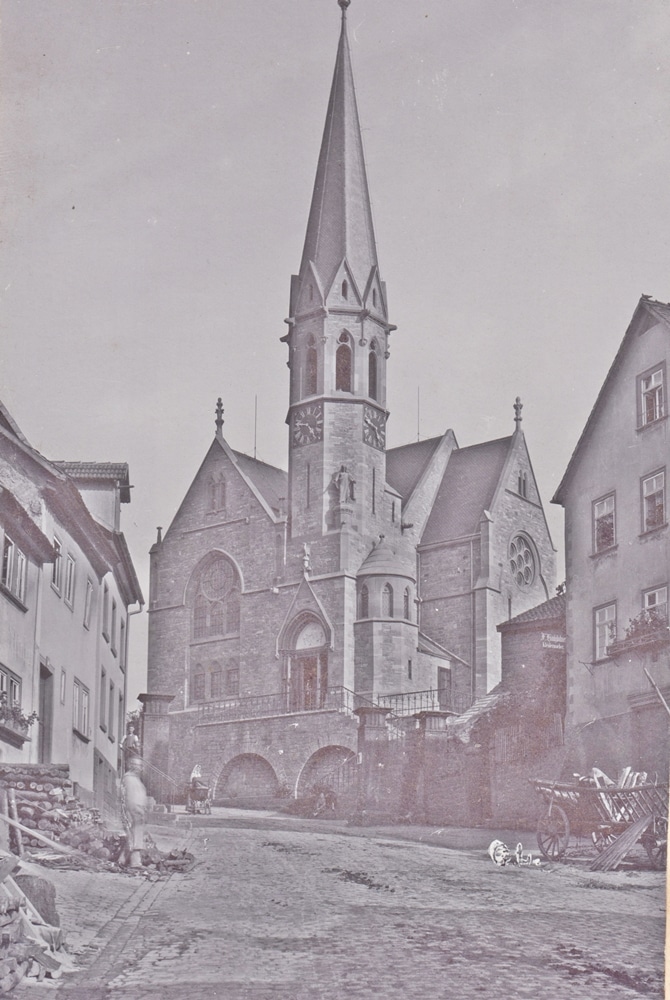
In this place the so called “Upper Gate” was taken down in 1827/28. Eight cartloads of building stones were delivered for the “4 columns at the New Gate”. The statue of Virgin Mary was found in the mud of the river Main and put up outside the New Gate in the same year. The late-medieval […]