Bürgstadt
Bürgstadt – a real insider's tip for wine lovers
A holiday in Bürgstadt means enjoying food, wine, the town and its surrounding nature.
When it comes to red wine the picturesque town of Bürgstadt is the most important wine town in Franconia.
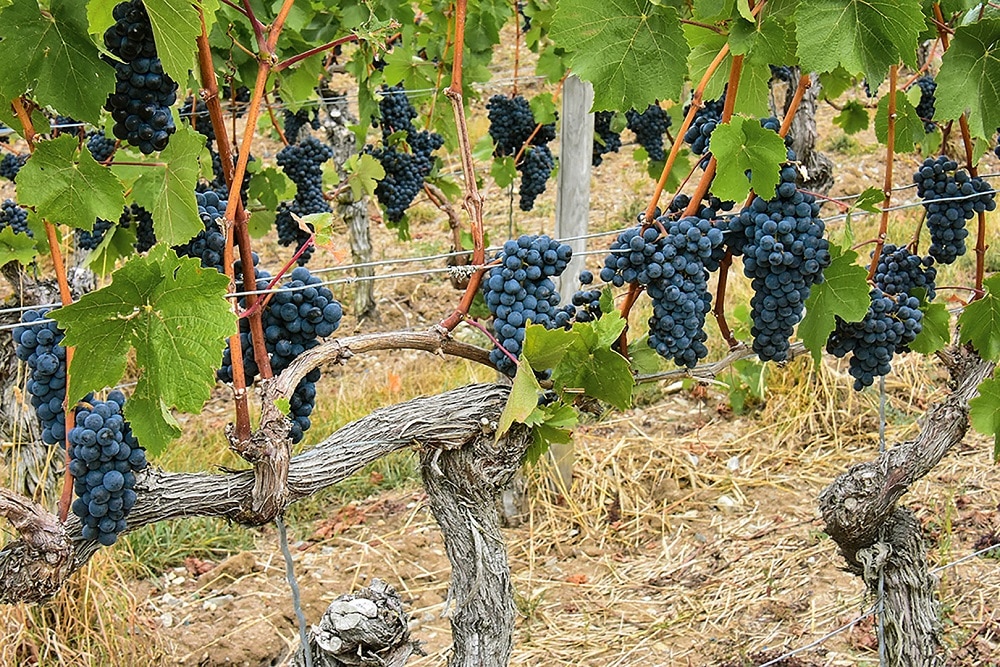
The red wine from Bürgstadt combines a broad variety with the highest quality of Franconian viniculture.
Still, Bürgstadt is more. The active vintners’ town is an official “Genussort” (“Place of Culinary Delight”). An honour only awarded to 100 towns in Bavaria altogether. So in Bürgstadt the well-kept townscape, the lovely setting of Bürgstadt, its pronounced viniculture and the tight network of those crafting regional culinary delights with the restaurants all form a whole.
People here also know how to party. The Straßen- und Hoffest (“street and yard festival”) and the WeinKulturNacht (“night of wine and culture”) include the entire old part of the town. Visitors from near and far stroll from yard to yard and enjoy the variety of offers making each festival a unique experience. These and a number of additional, exciting offers can be found in the event calendar.
Enjoy wine and various treats – Bürgstadt itself stands for zest for life.
Within Churfranken Bürgstadt also stands for hiking, an amazing mountain bike trail and highest quality of leisure activities. Among others Bürgstadt is a stage stop of the Franconian Red Wine Hiking Trail, offers 26 km / 16 mi of fun on the mountain bike trail “BÜ 1” and invites you on pleasant bicycle and hiking trails, to the heated public outdoor pool with a water slide and on tennis courts and into squash halls.
Some witnesses of Bürgstadt’s old history are first of all “The Martinskapelle” dating back to the 10th century with its elaborate “Biblia Pauperum” from the late 16th century, the town hall built in the Renaissance, a late Neolithic hill fort (Ringwallanlage), the ruin of the Centgrafen chapel (Centgrafenkapelle) from the Thirty-Years War, and the tenderly decorated museum with its focus on viniculture and stone processing.
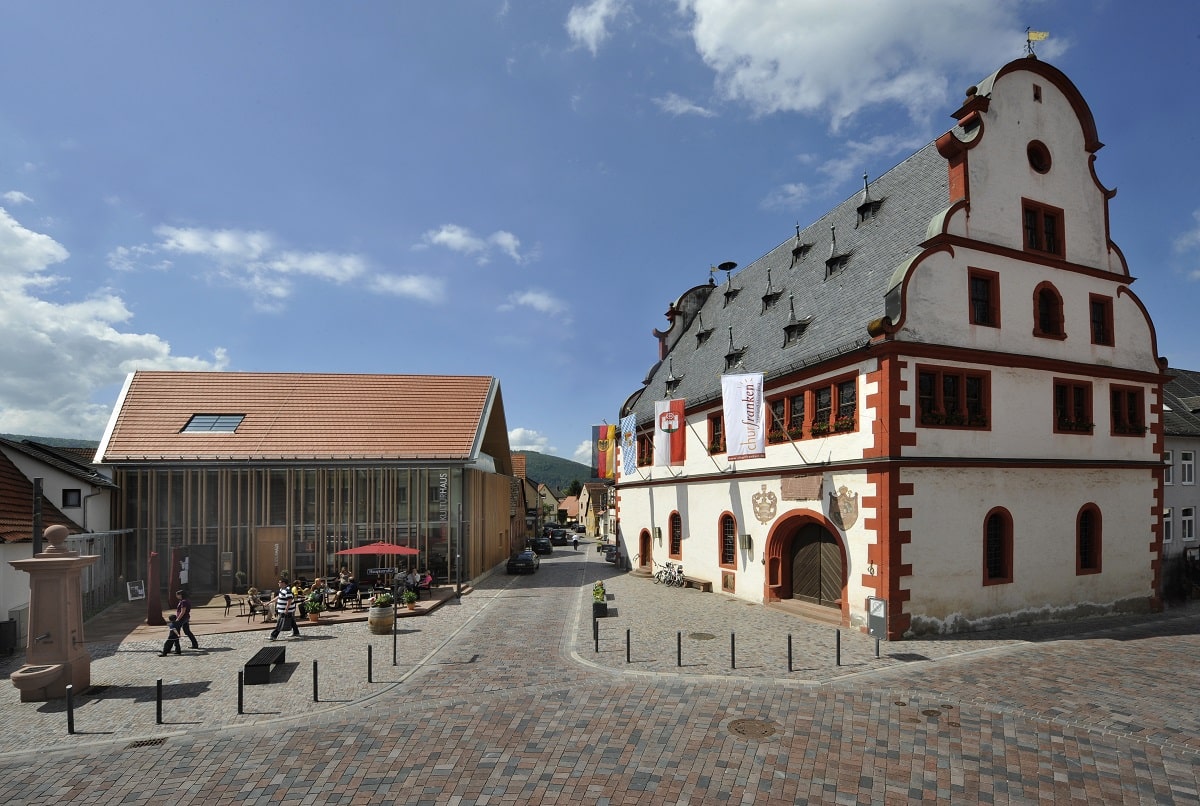
Let the day fade away in a vintner’s tavern, enjoying wine, a small meal and refreshing chats. Start your visit to Bürgstadt at the Churfrankenvinothek, right next to the Old Town Hall – you will also find a lot of information for your stay there.
Sights
New Parish Church
Nr. on the small map: 4 (Bürgstadt) When on March 12th, 1961, the New Parish Church was inaugurated by Bishop Josef Stangl, a long-cherished venture of the locals had finally
Town Hall Bürgstadt
Nr. on the small map: 6 (Bürgstadt) The town hall was built between 1590 and 1592, and decisively shapes the old town. Chronologically and artistically it is strongly connected to
Hauptstraße and Freudenberger Straße
Nr. on the small map: 7 (Bürgstadt) The complex half-timbered houses and the large sandstone arches along the Freudenberger Street, previously named Lauersend, indicate the former wealth of Bürgstadt’s citizens
First Parish Church and Former Church Yard; a Fortified Church
Nr. on the small map: 8 (Bürgstadt) The First Parish Church is favorably picked for weddings and baptisms. Throughout summer, one Holy Mass a week is celebrated. The small door
Martinskapelle (St. Martin’s Chapel)
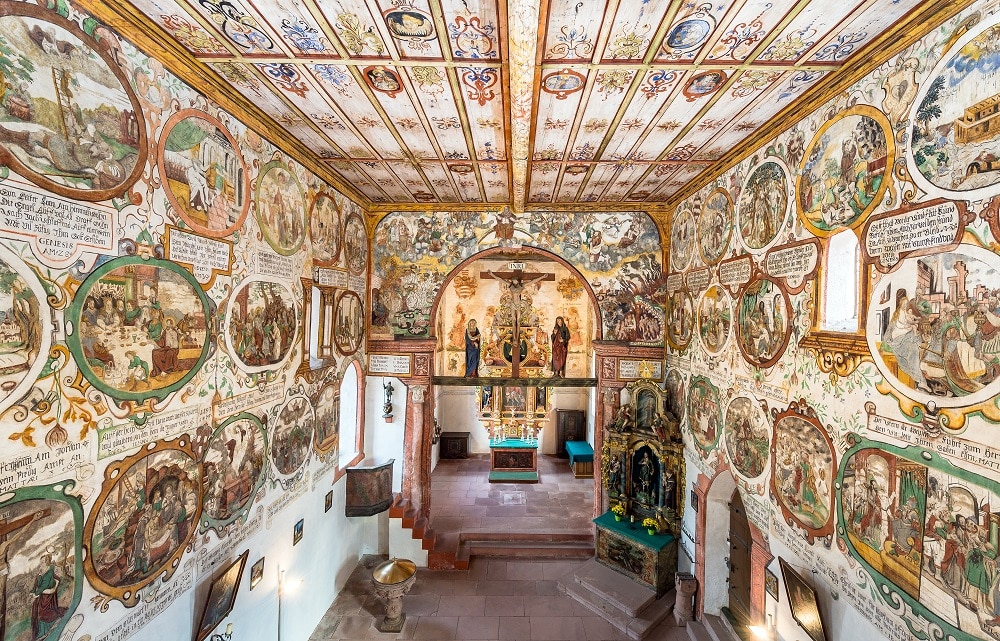
Nr. on the small map: 9 (Bürgstadt) Between the years 900 and 1000, the Martinskapelle was built and most likely used as a parish church for the entire surrounding areas.
Museum Bürgstadt
Nr. on the small map: 1 (Bürgstadt) In the Museum Bürgstadt timelines show the local historical events in relation to church history and trans-regional history. This way the museum presents the history
Lower Mill
Nr. on the small map: 2 (Bürgstadt)The Lower Mill most likely dates back to the 13th century. During its use, it served as a grain, oil and fulling mill. Floods
Historic Bridge on the River Erf
Nr. on the small map: 3 (Bürgstadt) The year 1538 is the first time a bridge across the River Erf was mentioned. On St. Michael’s Day in 1732 (Sep 29th),
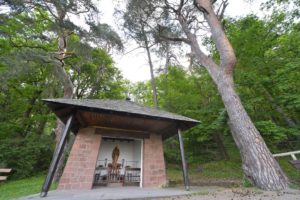
Stutzkapelle (Chapel)
Nr. on the small map: 13 (Bürgstadt) The Stutzkapelle was built during the Marian year 1954 with own efforts and donations by the Kolping-family of Bürgstadt. The municipality provided the premises
European Culture Trail “Mainhölle” and “Abundance of Images”
Nr. on the small map: 10 (Bürgstadt) Mainhölle (Main-hell) is the name of the quarries opposite Bürgstadt which can be seen from the European Culture Trail. The Red Sandstone is bedrock
Waldlehr- und Erlebnispfad (“Forest Nature and Adventure Trail”)
Nr. on the small map: 11 (Bürgstadt) Cultural and Youth Trail on the Nibelungensteig Along the approximately 2 km of the forest nature and adventure trail, 11 stages not only offer
Jugendwanderweg (“Cultural and Youth Trail on the Nibelungensteig”)
Nr. on the small map: 12 (Bürgstadt)About four of the ten kilometres of the Cultural and Youth Trail are part of the “quality hiking trail” Nibelungensteig. Those hiking on the long-distance trail
Prehistoric Ringfort
Nr. on the small map: 14 (Bürgstadt) Around 3200 BC, a significant Neolithic site with a wooden fort and rampart originated on the Bürgstadter Mountain. This first settlement period lasted
Centgrafenkapelle (unfinished chapel)
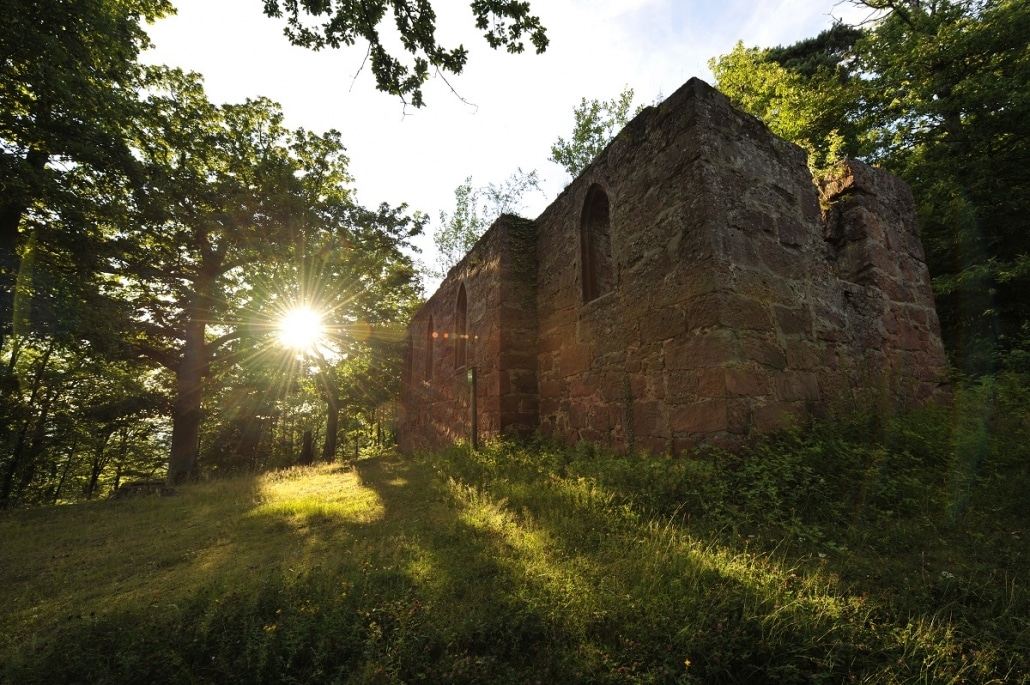
Nr. on the small map: 15 (Bürgstadt) The Centgrafenkapelle in the Bürgstadt Forest is unique. In 1630, the construction started, ordered by Centgraf Leonhard Gackstatt, but had to be left
Bodenstation (Soil Site in the Vineyards)
Nr. on the small map: 16 (Bürgstadt) The so-called soil site in Bürgstadt is one of currently seven soil sites in the vineyards around Lower Franconia and part of an
History
Bürgstadt was first officially mentioned in 1182; anyhow, the village is most likely remarkably older and had already had its first Golden Age with trans-regional importance during the early Middle Ages. In 950 at the latest, the not-to-be-missed Martinskapelle (Chapel) was built.
The Middle Ages
Bürgstadt experienced two glorious eras: During the early Middle Ages when quarrying Red Sandstone, and at the beginning of the Modern Era by viticulture. Around 1000, stone sarcophagi were shipped to cities along the Main River, the Rhine, and all the way to Denmark. Pillars which had been made on the Bürgstadter Mountain, found a place inside the Mainz Cathedral which was mainly built from Red Sandstone originating in the Main Valley.
In 1347, the parish church St. Margareta which kept getting additions up to the 18th century was first officially mentioned. At the archway of the west portal you find the relief of St. Margareta standing on a dragon. The main portal shows the risen Christ in the tympanum.
The famous organ of builder Johann Conrad Wehr was installed in 1749.
In 1340, a Centgraf *(Cent being a regional term for a judicial district; *Centgraf the magistrate for this district equal to a hundredman) was first mentioned. He was a district official, appointed by the sovereign (the Archbishop of Mainz), leading the district Cent Bürgstadt, and also organizing the national defense. Until the 18th century, Bürgstadt remained seat of the Centgrafs, albeit having lost some of its original significance during the late Middle Ages to the neighboring, and strategically more conveniently located Miltenberg which was protected by a castle.
Renaissance
Between 1590 and 1592 the town hall was built and became an important addition. Reading the dedicatory inscription, you find that the building was financed by a joint fund. The inhabitants had successfully paid their town hall on their own and until today it is one of the more famous sights of Bürgstadt.
In 1540, the red wine of Bürgstadt was first mentioned which, even by today’s standards, has not lost its outstanding relevance.
Thanks to good grape harvests at the end of the 16th and the beginning of the 17th century, Bürgstadt had prospered and was capable of renovating the Martinskapelle. Its interior was painted with 40 medallion depictions showing the history of salvation. This so-called “Paupers’ Bible” displays scenes from the Old and New Testament, helping illiterate people to understand the stories. Together with the older frescos in the choir, they are master pieces of the late 16th century renaissance.
Witch Hunt
There is a dark chapter in the history of the town on witch hunts (1616-1618 and 1627-1630), when more than 90 men and women were charged with witchcraft, tortured, and executed. The *Centgraf Leonhard Gackstadt (1626-1655) of Bürgstadt was one of the judges during those witchcraft trials. On the other hand he supported numerous pious foundations. It was assumed that by doing so he tried to salve his conscience.
In 1628, he donated a new high altar for the Martinskapelle, and in spring of 1629, he started with the building of the Centgrafenkapelle (see # 14) on the Bürgstadter Mountain.
Tobacco Growing
Tobacco growing has a long history in Bürgstadt. In 1851, the former innkeeper Michael Anton Schäfer first tried to cultivate tobacco in Bürgstadt. With 23 hectares in 1938, the acreage for Bürgstadt-tobacco was at its peak, declining during WW II. Only during the 1950s it almost re-occupied the initial pre-war area. After 1955, tobacco growing descended. Since the economic conditions of the population had improved remarkably during those days, it was suddenly possible to do without the often precarious earnings from tobacco growing. The Albert Meisenzahl family, located in the Freudenberger Street, was the last to cultivate tobacco until 1988.
Genussort / Place of Culinary Delight Bürgstadt
Today, whenever red wine is involved, Bürgstadt is one of the most important wine locations of Franconia. Range and highest quality of Franconian red wine viticulture unify incomparably in the „Börscheder“, a respectful nickname for wine from Bürgstadt throughout Churfranken.
But Bürgstadt is even more: The lively vintners’ location is officially one of only 100 official places of culinary delight in Bavaria.